

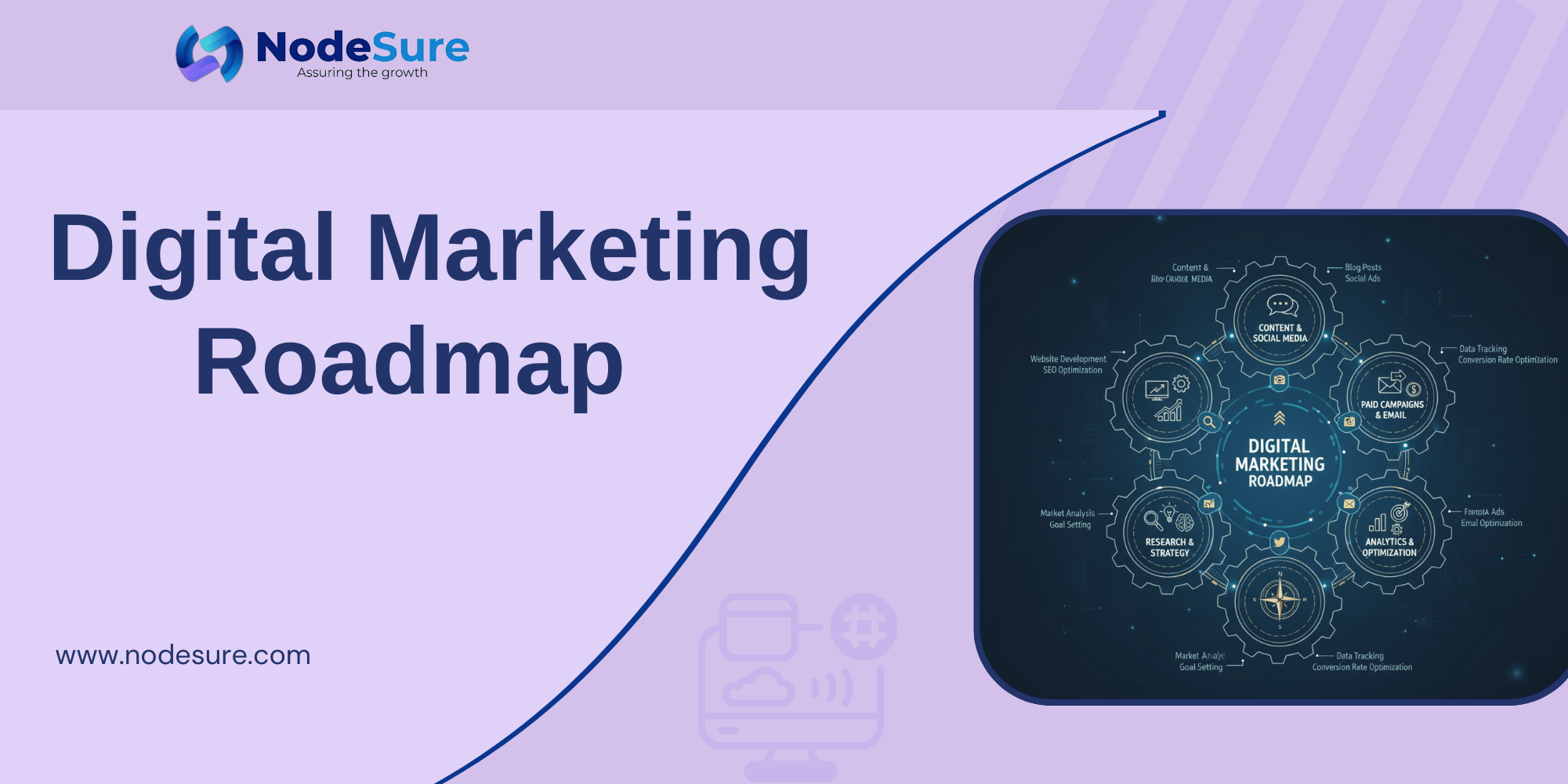
In today’s fast-moving digital world, businesses can no longer rely on random marketing efforts. Success comes from having a clear digital marketing roadmap that aligns goals, channels, tools, and execution into one structured plan. A digital marketing roadmap helps you understand where you are, where you want to go, and how to get there using the right strategies.
This blog presents a complete, easy-to-understand digital marketing roadmap from planning to scaling. Whether you are a startup or a growing business, it guides you in building a strong, result-driven digital presence.
Understanding the Purpose of a Digital Marketing Roadmap
A digital marketing roadmap is a long-term plan that outlines your digital marketing goals, strategies, timelines, and key performance indicators. It brings clarity, consistency, and direction to your marketing efforts.
Key reasons why a roadmap is important
• Prevents wasted budget on unplanned campaigns
• Helps align marketing with business goals
• Makes performance tracking easier
• Improves team coordination and execution
• Supports scalable and sustainable growth
Step 1: Define Clear Business and Marketing Goals
Every roadmap starts with clear objectives. Without goals, digital marketing becomes guesswork.
Business goals may include
• Increasing sales or revenue
• Generating high-quality leads
• Building brand awareness
• Expanding into new markets
• Improving customer retention
Marketing goals should be specific and measurable
• Increase website traffic by 40 percent in 6 months
• Generate 500 qualified leads per month
• Improve conversion rate from 2 percent to 4 percent
• Grow social media engagement consistently
Clear goals ensure every digital activity has a purpose.
Step 2: Understand Your Target Audience
Knowing your audience is the foundation of digital marketing success. A roadmap without audience research often fails.
Audience research includes
• Age, gender, and location
• Interests, challenges, and pain points
• Online behavior and preferred platforms
• Buying intent and decision-making process
Create buyer personas to represent your ideal customers
• Who they are
• What problems do they face
• What solutions are they looking for
• What motivates their buying decisions
This helps you create content and campaigns that actually convert.
Step 3: Build a Strong Digital Foundation
Before running campaigns, your digital assets must be optimized.
Website optimization essentials
• Fast loading speed
• Mobile-friendly design
• Clear navigation and structure
• Strong call-to-action buttons
• SEO-friendly content and pages
Brand consistency
• Same logo, colors, and messaging across platforms
• Clear value proposition
• Trust elements like testimonials and reviews
Your website and online presence act as the base of your entire digital marketing roadmap.
Step 4: Search Engine Optimization Strategy
SEO is a long-term growth pillar and a critical part of the roadmap.
Key SEO activities
• Keyword research based on search intent
• On-page optimization for titles, content, and images
• Technical SEO for site performance and indexing
• Local SEO for location-based visibility
• Regular content updates through blogs and landing pages
SEO benefits
• Organic traffic without paying for every click
• Higher credibility and trust
• Better long-term ROI
SEO should run parallel to all other digital strategies.
Step 5: Content Marketing Planning
Content fuels almost every digital marketing channel.
Content types to include
• Blog articles
• Social media posts
• Videos and short-form reels
• Email newsletters
• Case studies and guides
The content roadmap should focus on
• Educating your audience
• Solving problems
• Building trust and authority
• Supporting SEO and lead generation
A consistent content schedule ensures steady engagement and brand visibility.
Step 6: Social Media Marketing Strategy
Social media connects brands directly with their audience.
Platform selection based on the audience
• Instagram and Facebook for B2C brands
• LinkedIn for B2B marketing
• YouTube for long-form video content
• WhatsApp for direct communication and nurturing
The social media roadmap includes
• Content calendar planning
• Engagement strategies like polls and stories
• Paid ad campaigns for reach and conversions
• Community management and replies
Social media should focus on relationship-building, not just promotion.
Step 7: Paid Advertising and Performance Marketing
Paid marketing delivers faster results when done strategically.
Channels to include
• Google Search and Display Ads
• Social media ads on Meta and LinkedIn
• YouTube video ads
• Retargeting and remarketing campaigns
Paid ads roadmap should include
• Budget allocation by channel
• Clear campaign objectives
• Ad creatives and copy testing
• Landing page optimization
• Performance tracking and optimization
Paid marketing works best when combined with organic efforts.
Step 8: Lead Generation and Conversion Strategy
Generating traffic is not enough. Your roadmap must focus on converting visitors into leads and customers.
Lead generation methods
• Landing pages with lead magnets
• Contact forms and chatbots
• WhatsApp automation for instant responses
• Email opt-ins and free resources
Conversion optimization steps
• Clear value propositions
• Simple forms
• Strong CTAs
• Trust signals
A strong lead management system ensures no opportunity is wasted.
Step 9: Email and Automation Marketing
Automation helps nurture leads at scale.
An email marketing roadmap includes
• Welcome emails for new leads
• Educational drip campaigns
• Promotional and offer emails
• Re-engagement campaigns
Automation tools help with
• Lead scoring
• Personalized communication
• Follow-ups and reminders
• Customer onboarding
This step improves efficiency and customer experience.
Step 10: Analytics, Tracking, and Optimization
A roadmap is incomplete without measurement.
Key metrics to track
• Website traffic and sources
• Conversion rates
• Cost per lead and acquisition
• Engagement metrics
• ROI from campaigns
Tools commonly used
• Google Analytics
• Google Search Console
• Ad platform dashboards
• CRM and marketing automation tools
Regular analysis helps refine strategies and improve performance.
Step 11: Scaling and Growth Planning
Once the foundation is strong, the roadmap should evolve.
Scaling strategies
• Increase ad budgets on high-performing campaigns
• Expand into new platforms
• Create advanced content like webinars and courses
• Improve personalization and AI-driven marketing
• Strengthen customer retention strategies
A digital marketing roadmap adapts to market trends, customer behavior, and evolving business goals.
Final Thoughts
A digital marketing roadmap brings structure, clarity, and long-term vision to your online growth efforts. Instead of trying everything at once, it helps you focus on the right actions at the right time. From defining goals to scaling success, every step builds on the previous one.
Businesses that follow a clear digital marketing roadmap gain better results, stronger branding, and higher returns on investment. With consistency, data-driven decisions, and continuous optimization, digital marketing becomes a powerful growth engine rather than an expense.
Powered by Nodesure