

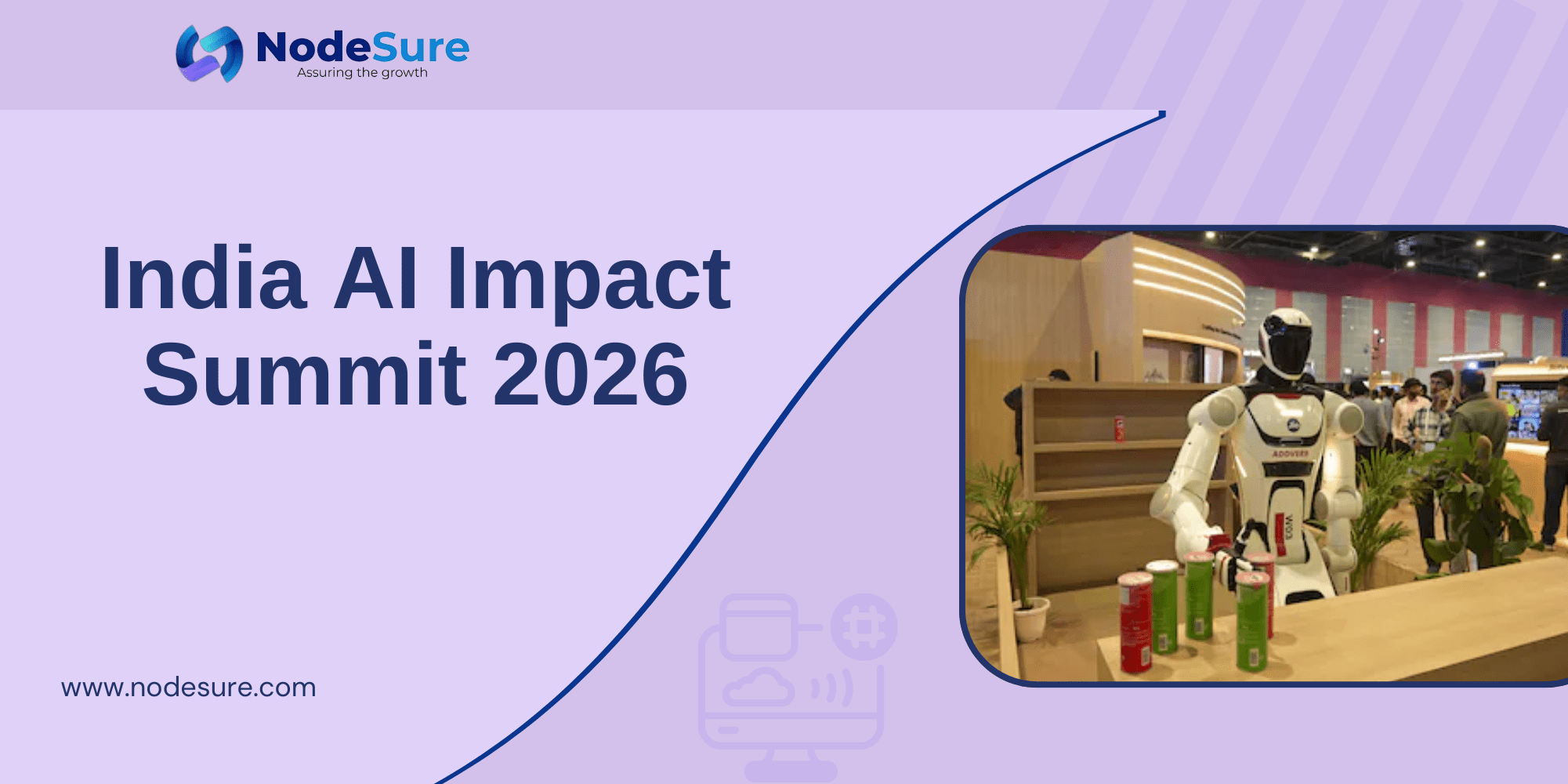
1. Important Lessons for Business Leaders from the India AI Impact Summit 2026
The India AI Impact Summit 2026 didn’t just confirm India’s AI ambitions — it reshaped the national roadmap.
Held in New Delhi, the summit brought together:
- 4,000+ delegates
- Representatives from 60+ countries
- Heads of state
- Global tech leaders
- Startup founders
- Civil society organizations
The signal was clear:
India aims to become an AI architect for the Global South — not just a consumer of AI technologies.
If you lead a business, product team, or policy function, the lessons below directly impact your strategic direction.
2. What Was the 2026 India AI Impact Summit?
The India AI Impact Summit 2026 was a high-level multi-stakeholder conference focused on inclusive and responsible AI for emerging economies.
It was co-organised by:
- NASSCOM
- Ministry of Electronics and Information Technology (MeitY)
- Global Partnership on AI
The summit functioned as both:
- A policy alignment platform
- A business innovation forum
Three Core Themes Dominated:
- Inclusive AI
- AI that works beyond metro cities
- Designed for multilingual and rural contexts
- Responsible AI Governance
- Ethics-first deployment
- Transparency and accountability frameworks
- AI for Economic Sovereignty
- Indigenous models
- Sovereign data and compute infrastructure
3. PM Modi’s Speech: 5 Directives That Matter
Narendra Modi delivered strategic policy signals rather than ceremonial remarks.
3.1 India Will Build, Not Just Use
- ₹12,000 crore allocation for Phase 2 of the IndiaAI Mission
- Focus on sovereign foundation models
- Trained on Indian languages and sector-specific datasets
Business Implication:
Government procurement will increasingly favor IndiaAI-aligned solutions.
3.2 AI Literacy as a National Priority
- Target: 10 million citizens by 2027
- Focus: Tier 2 and Tier 3 cities
Business Implication:
- Upskilling demand will surge
- EdTech, HR Tech, and L&D sectors gain commercial opportunity
3.3 Regulatory Sandboxes for Responsible AI
Five sector-specific sandboxes:
- Healthcare
- Agriculture
- BFSI
- Logistics
- Education
Business Implication:
Controlled environment to test AI before the full compliance burden.
3.4 Global South AI Collective
Founding members include:
- Brazil
- Nigeria
- Indonesia
- South Africa
Focus Areas:
- Shared datasets
- Open-weight models
- Cross-border AI governance protocols
Business Implication:
Early alignment may unlock access to 18 emerging markets.
3.5 Private Sector Accountability Framework
- National AI registry
- Mandatory annual transparency reports
- Effective Q1 2027
Business Implication:
AI governance must become operational, not symbolic.
4. Inclusive AI for Business in India: The BRIDGE AI Framework
Definition:
Inclusive AI refers to AI systems that deliver measurable value across:
- Urban and rural populations
- English and vernacular speakers
- Formal and informal sectors
Without reinforcing bias or exclusion.
BRIDGE AI – 5 Implementation Pillars
| Pillar | Description | Business Application |
| Bilingual-first Design | Local language support | Vernacular chatbots, voice IVR |
| Rural Infrastructure Readiness | Low-bandwidth, offline AI | AgriTech, Rural FinTech |
| Inclusive Data Sourcing | Representative training datasets | Reduced bias in credit scoring |
| Differential Access Pricing | Tiered pricing models | SaaS & B2B strategy |
| Gender Equity Audits | Bias audits in AI outputs | Hiring & credit tools |
For infrastructure-driven firms like NodeSure Technologies, BRIDGE AI should function as a product architecture checklist — not CSR.
5. Global South AI Summit Delhi: Strategic Impact
Historically, AI standards were shaped by:
- US
- UK
- EU
- China
The Delhi Declaration introduces a shift.
Participating nations commit to:
- Regional AI benchmarks for multilingual, low-resource economies
- Shared sovereign GPU infrastructure
- Governance frameworks balancing sovereignty and innovation
Commercial Insight:
Standard alignment may create simultaneous access across multiple emerging markets.
6. AI for Social Good 2026: Case Studies
6.1 NABARD AI Credit Model
National Bank for Agriculture and Rural Development
- Used satellite imagery, crop data, weather patterns
- 2.3 million credit applications processed
- 14% lower default rates
Key Insight:
Alternative data can replace traditional credit history.
6.2 iGOT Karmayogi AI Tutor
iGOT Karmayogi
- AI-powered personalized training
- 1.8 million public servants
- 12 languages
- 67% higher completion rates
- 31% improvement in competency
Key Insight:
Vernacular AI significantly increases adoption.
6.3 Maternal Health AI Alerts
MeitY + ASHA partnership:
- AI analysis of mobile-reported health data
- 22% reduction in maternal mortality
Key Insight:
AI augments human decision-making best in high-stakes environments.
7. Responsible AI: 6-Step Operational Framework
Responsible AI means demonstrable fairness, transparency, and accountability.
Step-by-Step Implementation:
- Map all AI touchpoints
- Classify risk levels
- Audit training data
- Implement explainability standards
- Establish structured feedback loops
- Begin AI transparency documentation now
8. What NodeSure Technologies Should Focus On
For companies operating at the intersection of infrastructure and intelligent systems:
Strategic Priorities:
- Audit vendor stack for IndiaAI compatibility
- Invest in vernacular-ready interfaces
- Start AI transparency reporting early
- Explore Global South expansion opportunities
- Position responsible AI as a competitive advantage
9. Conclusion: The Clock Has Started
The summit signals a structural shift in:
- AI development
- Regulation
- Market expansion
- Monetization models
Key interlocking elements:
- IndiaAI Mission Phase 2 funding
- BRIDGE AI framework
- Global South AI Collective
- National AI registry
The critical question is not whether your business will be affected.
The real question is:
Will you shape this AI architecture — or adapt to it later?